Top Security Adviser Says Any US-North Korea Talks Must Deliver Real Progress on Nuclear Issue
National Security Adviser Wi Sung-lac told reporters that Seoul will back efforts to rebuild trust between Washington and Pyongyang, but only if renewed dialogue produces substantive progress on the North's nuclear program and does not leave South Korea on the sidelines.
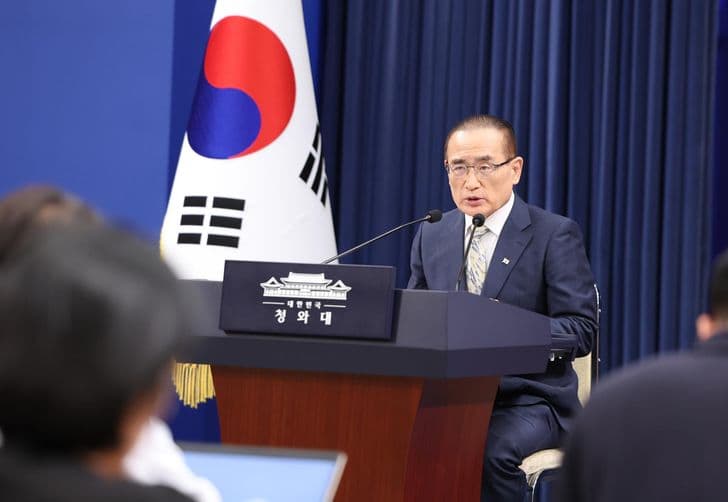
National Security Adviser Wi Sung-lac told reporters at a briefing at Cheong Wa Dae on Friday that any resumed dialogue between the United States and North Korea has to produce substantive progress on the North Korean nuclear issue, setting a bar for what Seoul considers a meaningful outcome rather than a symbolic restart of talks.
Wi said South Korea will support efforts to build trust between North Korea and the US and resume dialogue, framing Seoul's role as an enabler of the process rather than an obstacle to it. At the same time, he made clear that support comes with conditions attached to how the talks unfold and what they are meant to achieve.
Staying in the Room
A recurring theme of the briefing was Seoul's determination not to be left out of decisions that affect it directly. Wi said the government is working for close coordination with Washington specifically to ensure that its security posture is not weakened and that South Korea is not sidelined, language that reflects long-standing anxiety in Seoul about being reduced to a bystander in negotiations between Washington and Pyongyang. He added that South Korea will not allow its security posture to weaken during the course of any talks, tying the diplomatic opening to a firm floor on defense readiness.
A Broader Diplomatic Backdrop
The briefing came a little more than a week after Chinese Foreign Minister Wang Yi met with Wi and President Lee Jae-myung in Seoul on August 20, part of a stretch of regional diplomacy that has put Beijing back in the conversation over the peninsula's future. Wi indicated Seoul is also seeking Beijing's cooperation on its policy of peaceful coexistence, extending the coordination push beyond Washington to include China as well.
Other Fronts in the Alliance
Wi's briefing touched on issues beyond the nuclear file, including South Korea's 350 billion dollar investment commitment in the United States, e-commerce tensions involving Coupang, and the ongoing question of when wartime operational control will transfer from US to Korean command. Taken together, the briefing painted a picture of a government trying to manage several sensitive negotiations with Washington at once, all while keeping its footing as diplomacy around North Korea speeds up.