
PoliticsForeign Ministry

Seoul's Diplomatic Corps Pushes Back as Foreign Ministry Eyes Move to Sejong

Foreign missions based in Seoul are voicing unease over government plans to eventually relocate the Ministry of Foreign Affairs roughly 110 kilometers south to Sejong, warning that the distance could complicate the everyday business of diplomacy.

By Korea First StaffPublished 2 min read
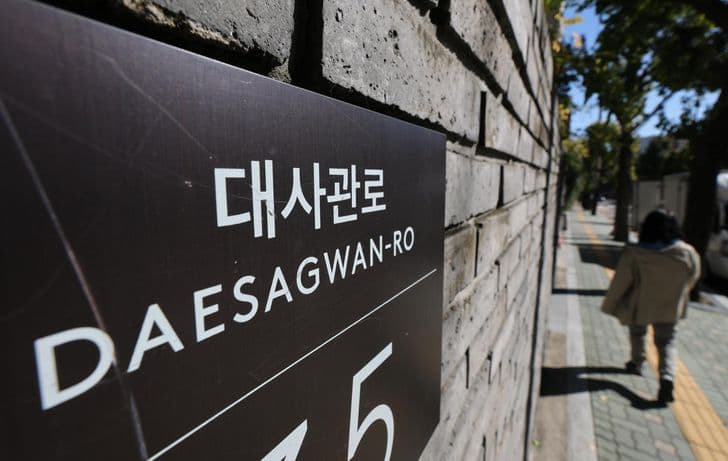
A street sign reading Daesagwan-ro, or Embassy Road, in Seoul.
A street sign reading Daesagwan-ro, or Embassy Road, in Seoul. · Source: Yonhap

Diplomats stationed in Seoul are starting to raise their voices over a long-building government plan to eventually move the Ministry of Foreign Affairs out of the capital, concerned that shifting the ministry some 110 kilometers south to Sejong could make routine diplomatic work noticeably harder.

The relocation sits inside a broader administrative push that touches 44 government ministries and agencies in total. Twenty-seven are slated to move in two waves during 2027, while the remaining 17, including Foreign Affairs alongside Unification and Defense, are expected to shift in stages through 2031 as new facilities are built.

A ministry Seoul's embassies rely on staying close

More than 110 foreign missions currently operate out of Seoul, clustered in a city where international business, resident communities and the Foreign Ministry itself have long sat within easy reach of one another. That proximity is exactly what diplomats fear losing.

One diplomat from an Asian mission described the prospect bluntly, noting that shifting an embassy's own operations would be difficult given how much of its corporate and resident community is rooted in Seoul. Another diplomat pointed to a more mundane but persistent worry, the simple inconvenience of having staff travel back and forth between Seoul and Sejong just to handle routine communication with the ministry.

A European diplomat offered a similar assessment, describing the planned move as an awkward complication for day-to-day diplomatic engagement rather than a dramatic rupture, the kind of friction that adds up over countless small meetings and errands.

A history of carve-outs now back on the table

The Foreign Ministry has not always been destined for Sejong. A 2005 law establishing the administrative city explicitly exempted the ministry from the relocation that eventually moved large parts of the government south, a carve-out that reflected exactly the kind of diplomatic-proximity concerns now resurfacing.

With that exemption apparently set to be revisited, embassies are left watching a process still in its early stages. No detailed relocation roadmap has been made public, leaving missions uncertain about timing, logistics or what diplomatic access in Sejong might eventually look like.

Government promises consultation, details still pending

Officials have responded by pledging what they describe as sufficient consultation with the diplomatic community to keep foreign relations running smoothly through any transition, while acknowledging that planning for the Foreign Ministry's specific move remains at an early stage. For now, the loudest signal coming from Seoul's embassy row is less opposition than unease about a 110-kilometer question still waiting on real answers.

Tags

  • Foreign Ministry
  • Sejong
  • embassies
  • relocation
  • diplomacy
Keep scrolling for more stories