Rich Chip Bonuses at Samsung and SK Are Unlikely to Become a Korean Norm
The profit-sharing bonuses that hand Samsung and SK hynix workers a tenth of operating profit are the envy of Korean business, but government opposition, shareholder backlash and the gulf between rich and ordinary firms make them unlikely to spread.
The unusually generous bonuses that Samsung Electronics and SK hynix pay their workers when profits surge are among the most envied perks in Korean business. They are also, by most accounts, unlikely to spread far beyond the chipmakers that can afford them.
The scale of the payouts explains both the envy and the caution. SK hynix has agreed to set aside 10 percent of its operating profit for performance bonuses, and Samsung Electronics, in a deal reached in May 2026, earmarked 10.5 percent, formulas that turn a semiconductor boom into windfalls for employees.
The government pushes back
Rather than hold the arrangements up as a model, the government has moved to check them. Industry Minister Kim Jung-kwan said he opposes linking employee incentives directly to a company's operating profit, and officials are discussing revisions that would require shareholder approval before such bonus plans could take effect.
The president has tried to lower the temperature around the fight itself. Disputes over how profit is divided, Lee Jae-myung said, should not be treated as labor disputes, a framing meant to keep a distributional argument from hardening into a standoff between unions and management.
Why it will not spread
The forces working against wider adoption are mostly financial and legal. Tying pay to operating profit invites backlash from shareholders, who see money flowing to employees without a matching rise in dividends, and it has already drawn legal complaints. It also feeds a wider unease about economic polarization, since only the most profitable firms could ever offer such terms.
That last point is the crux. A formula that hands workers a tenth of operating profit is a gift at a company minting record chip earnings and an impossibility at a firm scraping by. Rather than lifting pay across the economy, the scheme risks widening the gap between employees at cash-rich giants and everyone else.
Labor sees it differently
Unions reject the idea that the state should intervene. The Korean Confederation of Trade Unions called the government's stance irresponsible, arguing that whether compensation is paid as wages or performance bonuses is the result of arrangements that labor and management have developed through years of negotiations.
From that view, the bonuses are not a loophole to be closed but a hard-won outcome of bargaining, and a government that steps in to require shareholder sign-off is tilting the table toward capital. The disagreement is less about the money than about who gets to decide how it is split.
A fight still unfolding
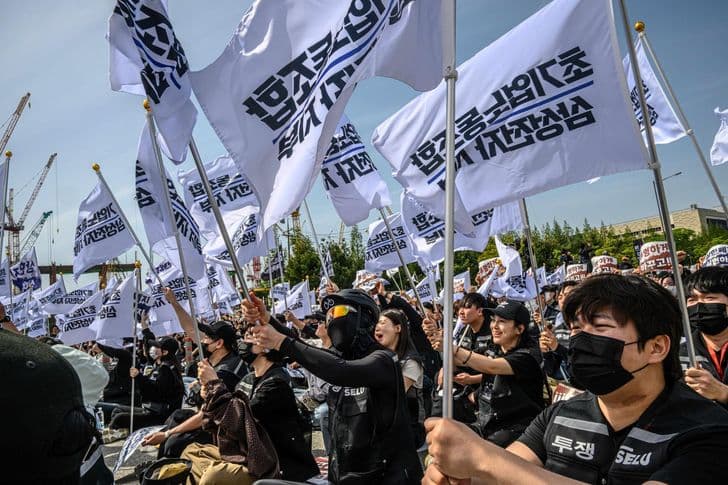
The tension is already reshaping how workers organize. At SK hynix, employees are moving to form a single union combining production and office staff, a bid for more bargaining power after management proposed paying part of the bonus in treasury shares rather than cash.
What began as a perk of the chip boom has become a test of Korea's economic model, of how far profit can be shared, who must approve it, and whether a benefit born at the top of the corporate ladder can ever reach the rungs below. For now, the answer looks like no.