Most FSS Staff Say They Would Quit Over a Move to Sejong
A union survey found 85.6 percent of Financial Supervisory Service employees would consider resigning if the regulator is relocated out of Seoul, a warning shot as the Lee government's decentralization push nears a cabinet decision.
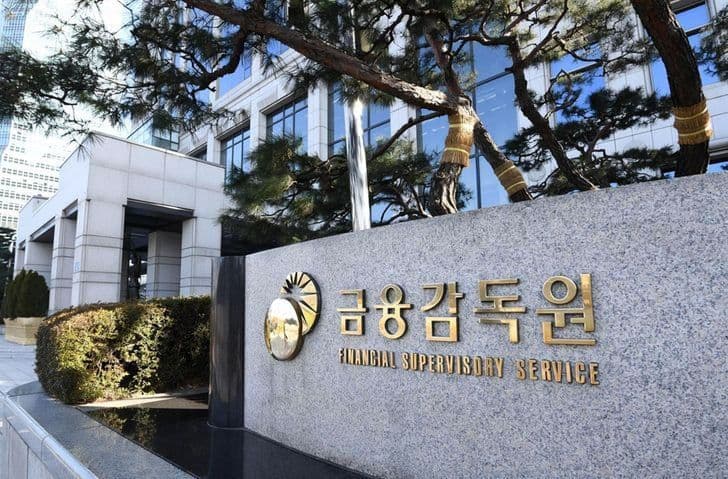
A granite marker with the Financial Supervisory Service name in Korean and English stands in front of the agency's building in Seoul. · Source: Korea Times file
A new survey from the labor union at South Korea's Financial Supervisory Service found that the overwhelming majority of its staff would consider quitting rather than follow the agency if it is moved out of Seoul, a warning that lands just as the government prepares to weigh the relocation in cabinet.
Of the 1,538 employees the union surveyed, 85.6 percent said they would consider leaving if the FSS relocates, and the number climbs higher among younger staff, with 92.5 percent of employees under 40 saying the same. The generational gap points to a workforce whose most mobile members, the ones with the most alternative options, are also the ones most willing to walk.
A Pattern Already Underway
The survey lands on top of attrition that has been building for years. Between 2022 and July of this year, 481 employees left the FSS, with more than 100 departures recorded in every year of that stretch and 54 already gone in 2026 alone. Staff in their 20s, 30s and 40s accounted for 180 of those exits, or 37.4 percent of the total, and that younger cohort made up half of everyone who left in 2026, a sign that the erosion is concentrated exactly where the agency can least afford to lose people.
The Plan Behind the Anxiety
The relocation under discussion would send the FSS to Sejong as part of President Lee Jae-myung's broader push to move government functions out of the Seoul area and ease the concentration of population and institutions in the capital region. The cabinet is expected to begin deliberating the move as early as this week, putting a concrete decision within sight for the first time.
The Union's Case Against Moving
The FSS labor union laid out its objection in a statement on August 17, arguing that relocating the regulator would move the supervisory authority away from the front lines of oversight, a reference to the financial firms and markets concentrated in Seoul that the FSS exists to police. The union also pointed out that major developed economies do not typically separate their regulators from their financial centers, citing the Securities and Exchange Commission and the Federal Reserve in the United States, the Financial Conduct Authority in Britain, and Japan's Financial Services Agency as examples of watchdogs that stay close to the markets they supervise.
The unions at the FSS and the Korea Deposit Insurance Corporation, another financial regulator caught up in the same relocation discussion, plan to hold a joint press conference at Cheong Wa Dae on Monday to press their case before the cabinet takes it up. With the survey numbers now public, the government faces a decision that carries a staffing cost attached to it before a single employee has actually been asked to move.