Korea's Economy Beats Expectations With 0.6 Percent Growth in Second Quarter
The Bank of Korea's preliminary reading put quarter-on-quarter growth at 0.6 percent between April and June, triple the central bank's own projection, as a rebound in semiconductor shipments carried the export column.
South Korea's economy grew faster than almost anyone expected in the second quarter, with the Bank of Korea reporting a 0.6 percent expansion from the previous three months. The figure, released Thursday, landed well above the 0.3 percent that markets had penciled in and comfortably clear of the central bank's own 0.2 percent projection.
On a year earlier basis the economy was 3.7 percent larger, a pace that puts Korea among the stronger performers in the advanced world for the period. The quarterly number cooled from the unusually brisk 1.8 percent recorded in the first quarter, but coming in at double or triple the various forecasts, it reframed a growth story that many had written off as fading.
Chips do the heavy lifting
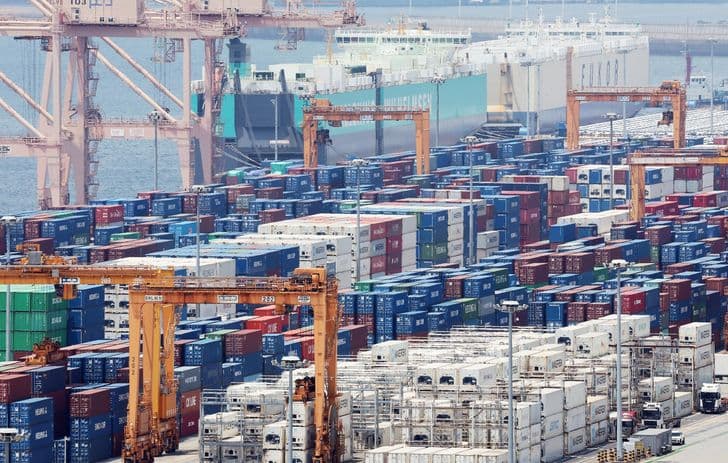
The engine, once again, was exports. Overseas shipments rose 1.4 percent over the quarter, led by semiconductors and by machinery and equipment. The timing matters. Korea's chipmakers have been riding a wave of demand tied to artificial intelligence buildouts, and the second quarter data suggests that appetite is still feeding through to factory floors and port terminals rather than tapering off.
That reliance on a single sector cuts both ways. When memory chips and logic parts are in favor, they can lift an entire national account almost on their own. The flip side is a growth mix that leans heavily on global technology cycles the country does not control, which is why policymakers tend to treat a chip driven quarter with a measure of caution even when the headline flatters them.
A softer picture at home
Beyond the export column the domestic economy looked steadier than spectacular. Private consumption edged up 0.4 percent, a modest gain that points to households spending, though without the conviction that would signal a full recovery in confidence. Facility investment added 0.2 percent, a sign that businesses are still committing capital, if cautiously.
Construction was the weak spot, contracting 0.2 percent and continuing to act as a drag on the broader figures. The building sector has struggled through a stretch of high financing costs and cooling property activity, and the latest reading offered little evidence that the slump has turned.
Incomes get a lift from cheaper imports
One of the more striking numbers sat below the headline. Real gross domestic income, a measure that captures the purchasing power the country actually earns from its output, jumped 3.6 percent over the quarter and 15.6 percent from a year earlier. The central bank tied that surge to improved terms of trade, meaning Korea was paying relatively less for what it imports while holding up the value of what it sells abroad.
That gap between income and output growth is not trivial. When terms of trade move in a country's favor, the same volume of exports buys more, and the effect flows through to corporate margins and, eventually, to wallets. It is the kind of tailwind that does not show up in the growth rate itself but shapes how the expansion feels on the ground.
What it means for the months ahead
For the Bank of Korea, a print this far above its own forecast complicates the calculus. Stronger growth gives the bank room to hold rates steadier for longer without choking off activity, yet the underlying story remains lopsided, with external demand carrying a domestic economy that is still finding its footing.
The read for the rest of the year hinges on whether the chip cycle holds and whether households and builders can pick up more of the load. If semiconductor demand stays firm and the income boost from better terms of trade filters into spending, the second quarter could mark the start of a more durable stretch. If global technology demand wobbles, the same export strength that flattered these figures could just as quickly reverse them.