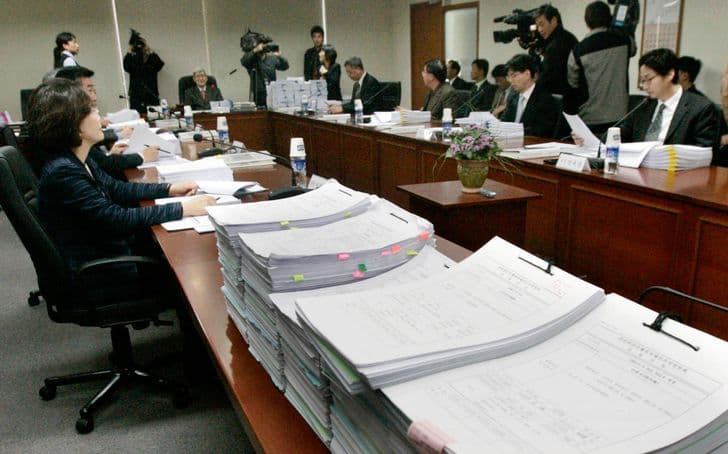
Korea Revives Its Hunt for the Fortunes of Japanese-Era Collaborators
A state commission that traces and reclaims wealth built by Koreans who aided Japan's colonial rule is reactivating in December after a 16-year absence, armed with a new law that can claw back proceeds even after collaborators' property has been sold.
Korea is reviving one of the more unusual projects in its long reckoning with the colonial past, a state-run hunt for wealth built by Koreans who collaborated with Japan during its occupation of the peninsula. A government commission tasked with tracing and reclaiming that property is being brought back to life after a 16-year absence.
The Investigative Commission on Pro-Japanese Collaborators' Property is set to reactivate in December, its work anchored by a special act taking effect on December 3. The body last operated from 2006 to 2010, and its return reopens a chapter many assumed was closed.
What the first effort recovered
The earlier commission left a concrete record. Over its four years it identified 168 collaborators, designated 2,359 parcels of land for confiscation, and issued rulings against 24 descendants who had already sold inherited property. All told, it recovered assets valued at 237.3 billion won, about 175 million dollars.
Those numbers hint at both the reach and the limits of the original push. It reclaimed a substantial sum, yet much wealth slipped away as property changed hands and heirs converted land into money that was harder to trace. The gap between what was found and what was suspected is part of why the state is trying again.
A wider net this time
The revived effort is designed to close some of those loopholes. A task force of 11 officials, drawn from the justice, interior and veterans affairs ministries and the Korea Forest Service, was assembled on June 22 to prepare the relaunch. Its members span the agencies that hold land records, family registries and the machinery of enforcement.
The new law hands the commission tools the old one lacked. It allows the state to claw back proceeds even after a property has been sold, reaching money that once would have been beyond recovery, and it adds rewards for citizens who report hidden assets, turning the public into a set of extra eyes.
History that colonial rule still shapes
The project sits atop a wound that has never fully healed. Japan ruled Korea from 1910 to 1945, and the fortunes some Korean families built by aiding that rule remain a live grievance, bound up with questions of who profited from occupation and whether their heirs should keep the gains.
Scholars see the renewed interest as part of a broader turn toward the past. Park Kyung-mok, a history professor at Chungnam National University, has pointed to the value of Koreans understanding their own roots, a sentiment reflected in the culture at large.
A nation looking back
That turn shows up in unexpected places. Online searches for finding one's ancestors have surged around fiftyfold, and searches for genealogy have more than doubled, signs of a public newly curious about where families stood during the occupation.
For the state, the asset hunt is both practical and symbolic. Reclaiming land and money is a legal matter of records and rulings, but the deeper aim is a moral one, to declare that wealth built on collaboration was never fully legitimate, and that even 80 years on, the ledger of the colonial era is not yet closed.