Korea Bets 10 Trillion Won on Seven Technologies to Power Its Next Growth Engines
From small nuclear reactors to quantum computers, the government unveiled a plan called SEED to pour money into seven technologies it hopes will drive the economy for decades, backed by a 10 trillion won research commitment.
The Korean government has laid out a plan to pour money into seven technologies it believes will drive the economy for decades, from small nuclear reactors to quantum computers, in a bid to line up the growth engines the country will run on next.
Announced on Wednesday at the presidential office, the initiative goes by the name SEED, for Strategic Emerging Engines for Disruptive Innovation, and was unveiled jointly by the Ministry of Science and ICT and the Ministry of Trade, Industry and Resources. It groups the projects under three headings, renewable energy, frontier technologies and a more secure supply chain.
A new generation of reactors
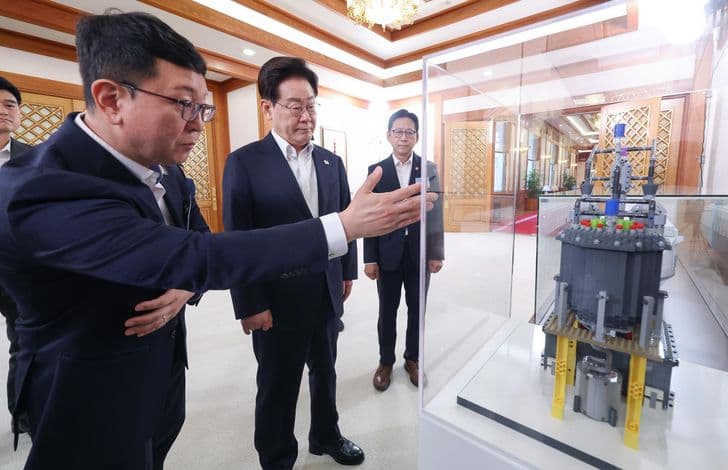
Energy anchors the plan. The government aims to commercialize water-cooled small modular reactors by 2035 and to begin construction of non-water-cooled versions around 2030, betting on compact nuclear plants as a cleaner source of round-the-clock power. It also set a target of developing a homegrown nuclear fusion reactor by 2035, in partnership with private industry.
Betting on the frontier
The frontier list reaches further out. Korea wants to build a 100-qubit quantum computer by 2029 and to become a global leader in manufacturing quantum chips within a decade, staking a claim in a field that could upend computing. In space, it plans to complete a low-Earth-orbit satellite communications network by 2035.
Biology and the brain round out the ambitions. The plan calls for AI-based bio infrastructure by 2030, including models that predict cancer cell behavior, and for a commercial brain-computer interface product by 2035, technology that links minds directly to machines.
The money and the materials
Behind the targets sits a spending commitment. The government pledged 10 trillion won, about 7.1 billion dollars, for research and development over five years, a sum meant to signal that the list is more than a wish. It also set an industrial goal alongside the science, to raise the recycling rate of ten key minerals to 20 percent by 2030 and shore up the supply chains those technologies depend on.
The ambition behind it
Officials framed the effort in national terms. They said the plan would give the next generation new opportunities to take on challenges and complete what they called an irreplaceable Korea that no one can rival, echoing a phrase the government has used to describe its wider push in AI and advanced industry.
The targets are distant and, like all technology roadmaps, easier to announce than to hit. Reactors, qubits and fusion have humbled richer programs before. Still, the plan sets a direction and puts money behind it, a bet that the country which built its wealth on chips and shipbuilding can engineer its next act before the current one runs out.