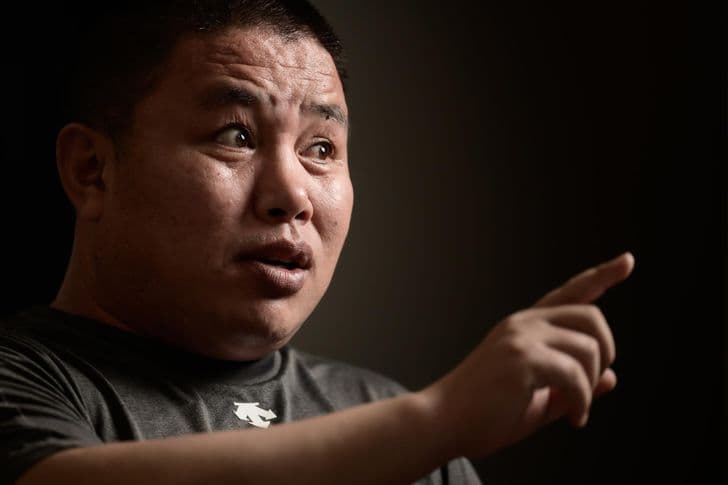
Hwang Ji-sung has spent more than a decade doing what North Korea works hardest to prevent, moving people and money across the border that separates the country from the world. A defector himself, he runs a network that has guided thousands out of the North and funnels cash back to the families they left behind.
The 46-year-old was born in Musan County, in North Hamgyong Province, and his own escape was not simple. Caught on a first attempt in 2005, he spent a year imprisoned before slipping out for good in 2009. What he saw on the other side, he said, made return unthinkable. I had already seen the wider world by then, he recalled. There was no way I could go back to living in that small village.
A network built on phone calls
The operation Hwang describes runs on coordination more than muscle. From start to finish, he said, you coordinate timing and locations over the phone. A family in the South contacts him, he calls his people in the North with instructions, and those contacts guide the person to the Tumen River, down to the specific bend where they should wait, before Chinese partners take over on the far bank.
Secrecy holds it together. Members of the network are kept isolated from one another, and direction comes by phone, a design meant to ensure that if one link is caught, the rest survive. Since 2009, Hwang says, roughly 3,000 people have escaped with his help. In 2015, his busiest year, he moved between 350 and 450, around 30 percent of the 1,275 North Koreans who reached the South that year.
The rising price of escape
Getting out has become far more expensive. Before the pandemic, crossing the Tumen cost about 1 million won, roughly 707 dollars, with another 3 million for the long overland route to Thailand, some 4 million won in all. By 2019 the total had more than tripled, to around 15 million won, as the border tightened and the risks multiplied.
Where the money goes, and what it loses
The other half of Hwang's work is remittances, and the money is heavily taxed along the way. Converting won into a Chinese bank account takes a 5 percent cut, crossing the funds into the North takes another 5, a middleman takes 5 more, and a courier takes a further slice, so that by the time cash reaches a family, roughly 40 percent is gone.
What remains still matters enormously. Around 20,000 won converts to about 100 Chinese yuan, and in the North's black markets 100 yuan buys some 20 kilograms of rice, enough to keep a household fed. For Hwang, the point is bigger than groceries. When that money reaches people in the North, he asked, do you think they will think better of South Korea, or worse. The more who think better of it, he argued, the sooner unification comes.
A border that keeps hardening
The work is getting harder because both governments have raised their defenses. On the Chinese side, Hwang describes facial recognition, agents planted among defector groups, recruits drawn from Chinese nationals who studied in the South, and tracking devices hidden in ordinary objects, once even a doll. Beijing has also ended a quiet cooperation under which it previously handed roughly half of those it caught to Seoul.
The North relies on fear rather than technology. It does not have the advanced tools, Hwang said, but it is brutal instead. If they suspect someone has family in the South, he said, they take them in and ask whether they will betray Our Marshal if their family comes for them. Those caught face political prison camps, and some recruits feign cooperation only to report brokers to the security services.
More than a livelihood
Hwang frames the whole enterprise as more than a way to make a living. He began, he said, because he could not bear watching defectors weep over lost contact with their families when the news was within his reach. At first I did not understand why they would cry over having no news, he said. Getting that kind of news was not hard for me. So I told them, I will do it for you.
He casts the stakes in the largest terms. If the peninsula's division ever ends in gunfire, he warned, it would wipe out the Korean people. Better, in his telling, to keep the phones ringing and the money moving, and to let a little news and a little rice do the slow work that armies never could.