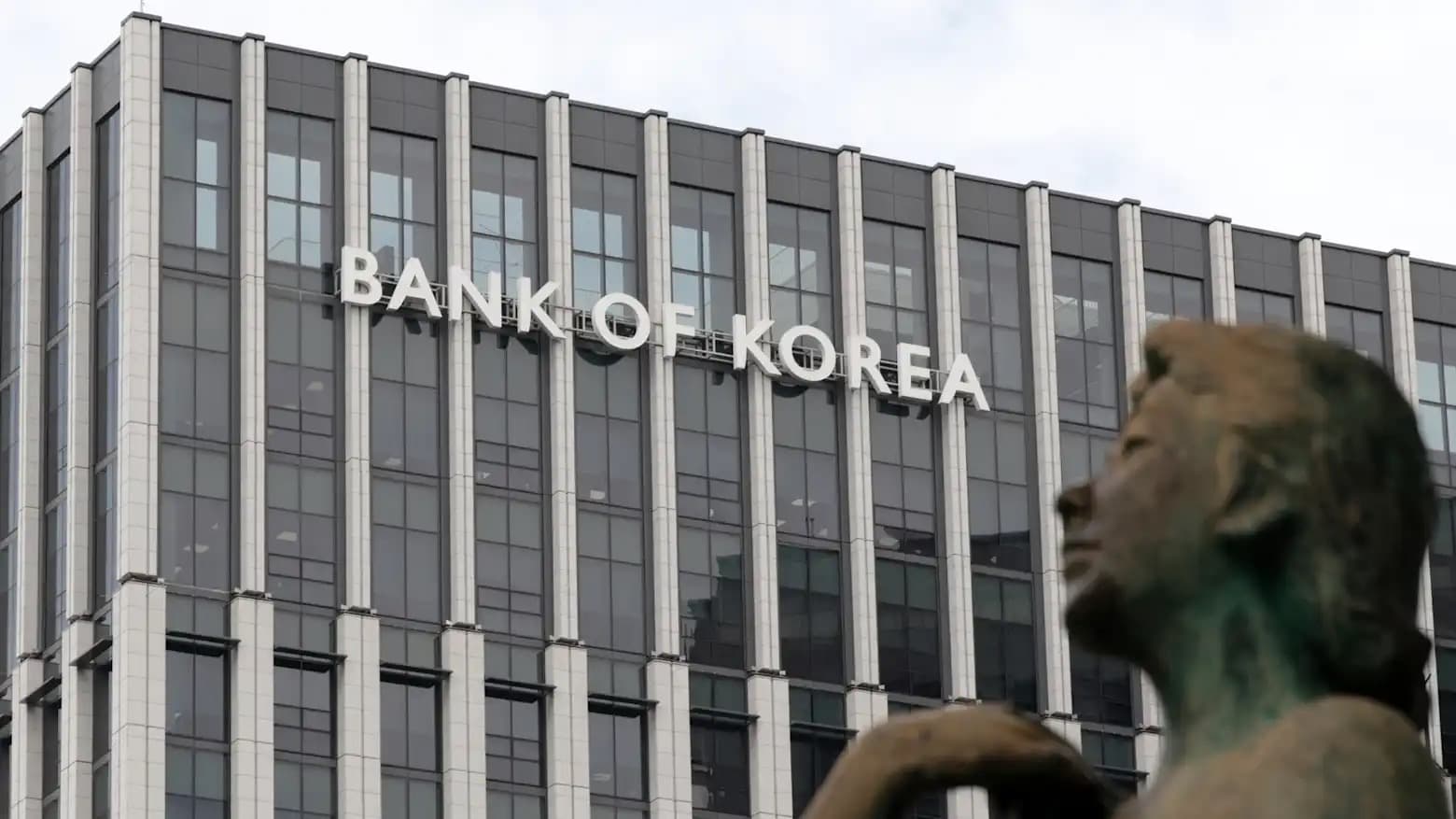
Bank of Korea Delivers Second Straight Rate Hike, Pushes Base Rate to 3 Percent
The central bank raised its policy rate by a quarter point for the second consecutive meeting, citing an unexpectedly strong economy fueled by a semiconductor boom, even as one board member dissented in favor of holding steady.
The Bank of Korea raised its base rate by a quarter point to 3 percent on Thursday, its second straight increase and the clearest signal yet that policymakers see inflation risk building faster than growth can absorb it.
The move follows a July hike of the same size, which had been the central bank's first rate increase since January 2023. Back-to-back hikes of this kind are rare for the BOK, and the new rate level is the highest the base rate has reached since January 2025.
A Nearly Unanimous Call
The board's vote was not unanimous. Six of the seven members supported the increase, while Hwang Kun-il dissented, arguing for holding the rate at 2.75 percent. The lone dissent underscores that even inside the central bank, opinion is divided over how aggressively to lean against inflation while growth is still accelerating.
An Economy Running Hotter Than Expected
The hikes come as the BOK has revised its 2026 growth forecast upward to 3.3 percent, a marked improvement driven in large part by an unprecedented boom in the semiconductor sector. Core inflation has stayed elevated even as that growth has picked up, leaving the central bank trying to cool price pressure without choking off an expansion that is, by most measures, going well.
A Preemptive Posture
Bank officials have described the approach as preemptive, moving on rates before inflation becomes entrenched rather than waiting for it to worsen. That framing suggests further increases could follow if growth and price pressures keep running together, though the pace and timing of any additional move will likely hinge on how exports and domestic demand evolve in the months ahead.
Pressure Building Outside Big Exporters
The tightening cycle is landing unevenly across the economy. While exports have continued to grow, driven in large part by the same semiconductor strength lifting the growth forecast, small businesses are facing intensifying headwinds, caught between higher borrowing costs and softer domestic conditions than the export sector is currently enjoying. That divide is likely to shape how much political and public pressure the BOK faces if it keeps raising rates.