
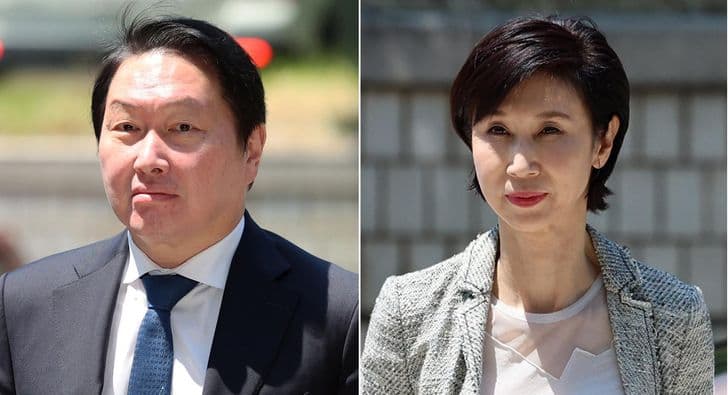
A demand for cash, and cash only, appears to be at the heart of SK Group Chairman Chey Tae-won's decision to keep fighting one of the most expensive divorce cases in Korean history. Chey filed an appeal to the Supreme Court just before a Friday midnight deadline, with one minute to spare, over a ruling that ordered him to pay 944 billion won, about 666 million dollars, to his former wife.
The case pits Chey against Roh Soh-yeong, the director of the Art Center Nabi, in a legal battle that has run for nine years. The Seoul High Court treated the money as a division of marital property rather than alimony, and set Roh's share at 33.3 percent, using a valuation dated April 16, 2024.
Why cash changes everything
The sticking point, by several accounts, is the form of payment. Chey had proposed a hybrid settlement of cash plus SK stock, but Roh rejected it and insisted on being paid entirely in cash. That distinction is not a detail; it goes to the heart of who controls one of Korea's largest conglomerates.
Paying in shares would have let Chey settle the bill without parting with money he does not easily have on hand. Paying in cash forces the opposite, and raising a sum this large could mean liquidating huge blocks of SK stock, a move his side warns would destabilize share prices and loosen his grip on the group's governance.
A bill that grows by the day
The clock is punishing. The ruling carries interest of 5 percent a year, which works out to roughly 130 million won a day, so every day the case drags on adds to what Chey may ultimately owe. Fighting the judgment buys time but not relief from the meter.