
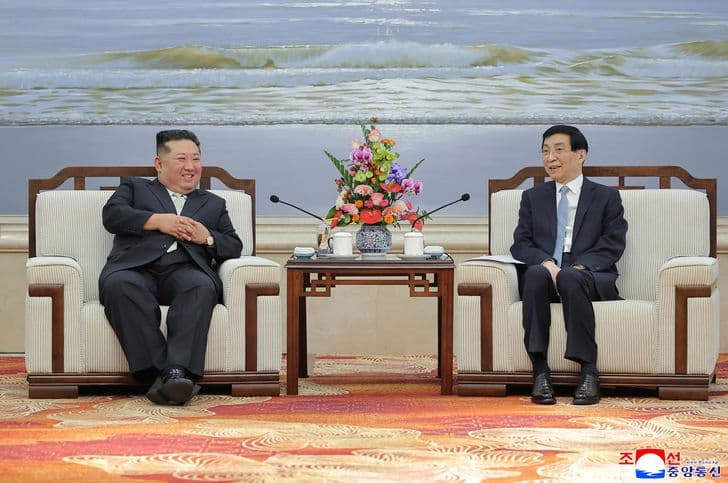
South Korea's National Intelligence Service has told lawmakers it believes Kim Jong Un may have used his recent one-day trip to China to convey Pyongyang's thinking on potential talks with the United States, an assessment that falls short of confirming any breakthrough but adds a layer of intent to a visit that otherwise looked mostly ceremonial.
A read built on circumstance, not direct evidence
The spy agency was notably careful about how far to take the claim. Even as it floated the possibility that Kim raised the subject of U.S. talks while in China, it acknowledged plainly that Washington and Pyongyang have yet to narrow their differences on conditions for dialogue, meaning any message Kim may have conveyed would have landed on ground that remains largely unchanged. The NIS also stopped short of describing Beijing as eager to help, saying China could gently convey Kim's stance to the U.S., but that it does not seem like China has the intention of actively mediating talks.
Reading the delegation rather than a transcript
Much of the agency's reasoning rests on who traveled with Kim and who he met, rather than any confirmed statement. Kim's meeting was with Wang Huning, a senior Chinese political adviser, rather than with Premier Li Qiang, a change the NIS attributed to scheduling rather than a deliberate snub, while noting Wang's history as a figure who has bridged communication between Xi Jinping and Kim in the past. The composition of Kim's own travel party mattered too: he brought senior diplomats, including Foreign Minister Choe Son-hui, a lineup the agency read as pointing toward diplomatic rather than military purposes for the trip.