
Moneycurrent account surplus

Korea's Quarterly Trade Surplus Just Beat Germany and Japan's Combined, a First in Three Decades

A chip export boom tied to the global AI buildout pushed Korea's second-quarter current account surplus to 116.6 billion dollars, more than Germany and Japan brought in together, a gap that has not happened since comparable records began in 1996.

By Korea First StaffPublished 2 min read
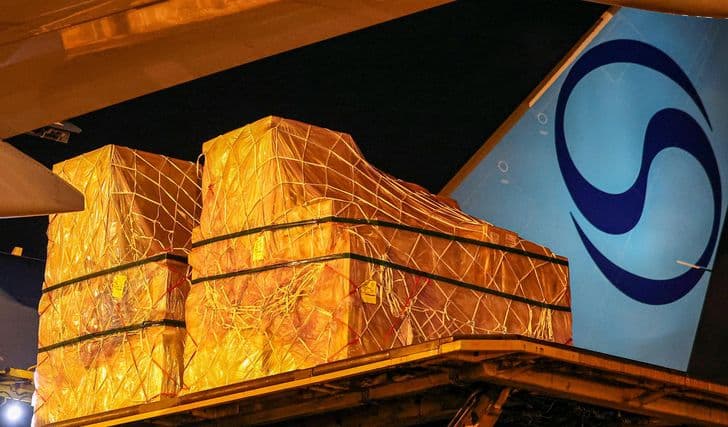
Cargo pallets wrapped in gold thermal blankets are loaded onto an aircraft at night.
Cargo pallets wrapped in gold thermal blankets are loaded onto an aircraft at night. · Source: Joint Press Corps

South Korea posted a current account surplus of 116.6 billion dollars in the second quarter, a figure large enough to top Germany and Japan's combined surplus of 102.9 billion dollars by 13.7 billion dollars, the first time Korea has out-earned both economies together since comparable data began in 1996.

A surplus that nearly quadrupled

The scale of the jump stands out as much as the milestone itself. Korea's surplus surged 310 percent from 28.4 billion dollars a year earlier, dwarfing the much milder gains posted by its two comparison points, with Germany's surplus rising 12 percent and Japan's just 5 percent over the same stretch. That gap in growth rates, not just the final totals, is what turned a respectable quarter into a record-setting one.

Semiconductors doing most of the lifting

The driver behind the surge was Korea's chip industry riding the global expansion of artificial intelligence infrastructure. Semiconductor exports jumped 181.6 percent to 113.89 billion dollars in the second quarter, and the momentum did not let up, climbing further to 148.02 billion dollars in the third quarter, up 218.7 percent from a year earlier. Those exports fed the current account from two directions at once, widening the trade surplus directly while also generating income from Korean firms' overseas investments tied to the same AI-driven demand.

A warning about leaning on one industry

Not every reaction to the numbers was celebratory. Kang Sung-jin, an economics professor at Korea University, cautioned that building the country's external surplus so heavily around the semiconductor boom carries real risk, given how closely that boom is tied to the fortunes of a single global technology cycle. He argued the more durable move would be restructuring sectors like petrochemicals and steel toward higher-value-added products, rather than treating the chip windfall as a substitute for diversifying what else Korea sells to the world.

How long the boom is expected to last

International forecasters expect the current run to continue for a while yet. The IMF projects Korea will rank second globally this year behind only China, with the largest surplus increase among the 190 countries it tracks, and sees Korea's current account surplus staying above 400 billion dollars annually through 2028 before beginning to taper, falling to 295.7 billion dollars by 2029 and 177.5 billion dollars by 2031. That trajectory gives Korea a wide window to act on warnings like Kang's, but it also puts a rough expiration date on just how long the chip boom alone can keep carrying these numbers.

Tags

  • current account surplus
  • semiconductors
  • Korea economy
  • AI boom
  • exports
Keep scrolling for more stories