
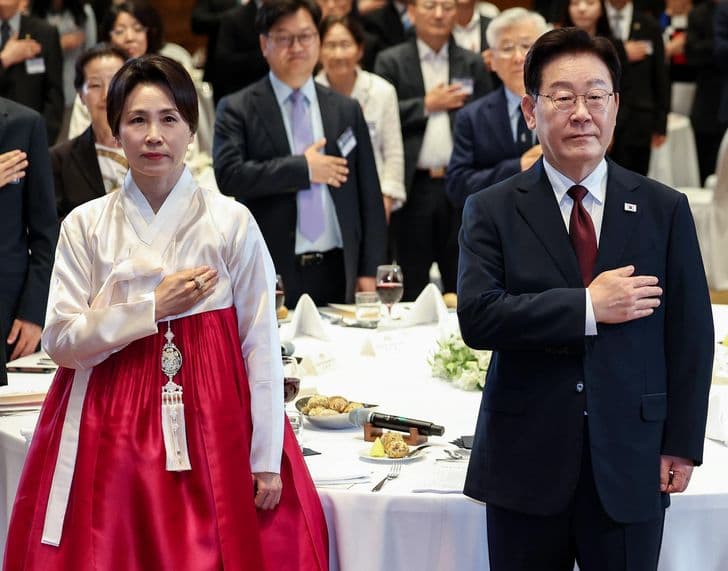
On the final leg of a long trip abroad, President Lee Jae-myung told Korean residents and businesses in Germany that they serve as a bridge between the two countries, casting the diaspora as an asset in Seoul's push to deepen ties with Europe's largest economy.
Lee spoke in Frankfurt, closing a five-nation tour that had already taken him through San Francisco and three South American capitals. Germany was the last stop, and the message there was less about new deals than about the people who carry the relationship day to day.
A community that carries the flag
The president pointed to the depth of Korean business in the region. Many Korean companies now operate across Frankfurt and the surrounding state of Hesse, he noted, spanning automobiles, electronics, finance, logistics and advanced technologies. The presence, in his telling, is broad enough to shape how Germany sees Korea.
From that base he drew his central theme. The Korean community, Lee said, could further strengthen the country's presence in the region by complementing national strengths with their strong local trust, a formula that pairs the reach of large firms with the credibility of people who live and work there.
A relationship on the rise
Lee framed the moment as an opening. Germany, he said, is showing growing interest in Korean culture, businesses and technology, a shift that gives the diaspora more to work with than in years past. Where curiosity runs in Korea's favor, a well-rooted community can turn interest into commerce.
The bridge metaphor is a familiar one for a leader courting a foreign public, but it carries particular weight in Germany, a country with which Korea has long-standing industrial and human ties. Presenting residents as partners rather than bystanders is a way of enlisting them in national strategy.
Closing the tour on a human note
After days of summitry and headline numbers, the Frankfurt stop offered a softer close, a president speaking to citizens abroad about their role rather than to executives about their money. It let Lee end the trip on the theme of connection.
What the visit produced was less a transaction than a posture, an argument that Korea's global standing rests not only on its companies and its technology but on the people who represent it far from home. In Germany, Lee asked that community to keep playing the part.