
PoliticsSouth Korea

Defense Chief Reiterates Need to Integrate South Korea's Military Academies

Defense Minister Kang Shin-chul told cadets that merging the Army, Navy and Air Force academies into a single institution is essential to prepare for future warfare, though the location remains under review.

By Morning Week NewsroomPublished 2 min read
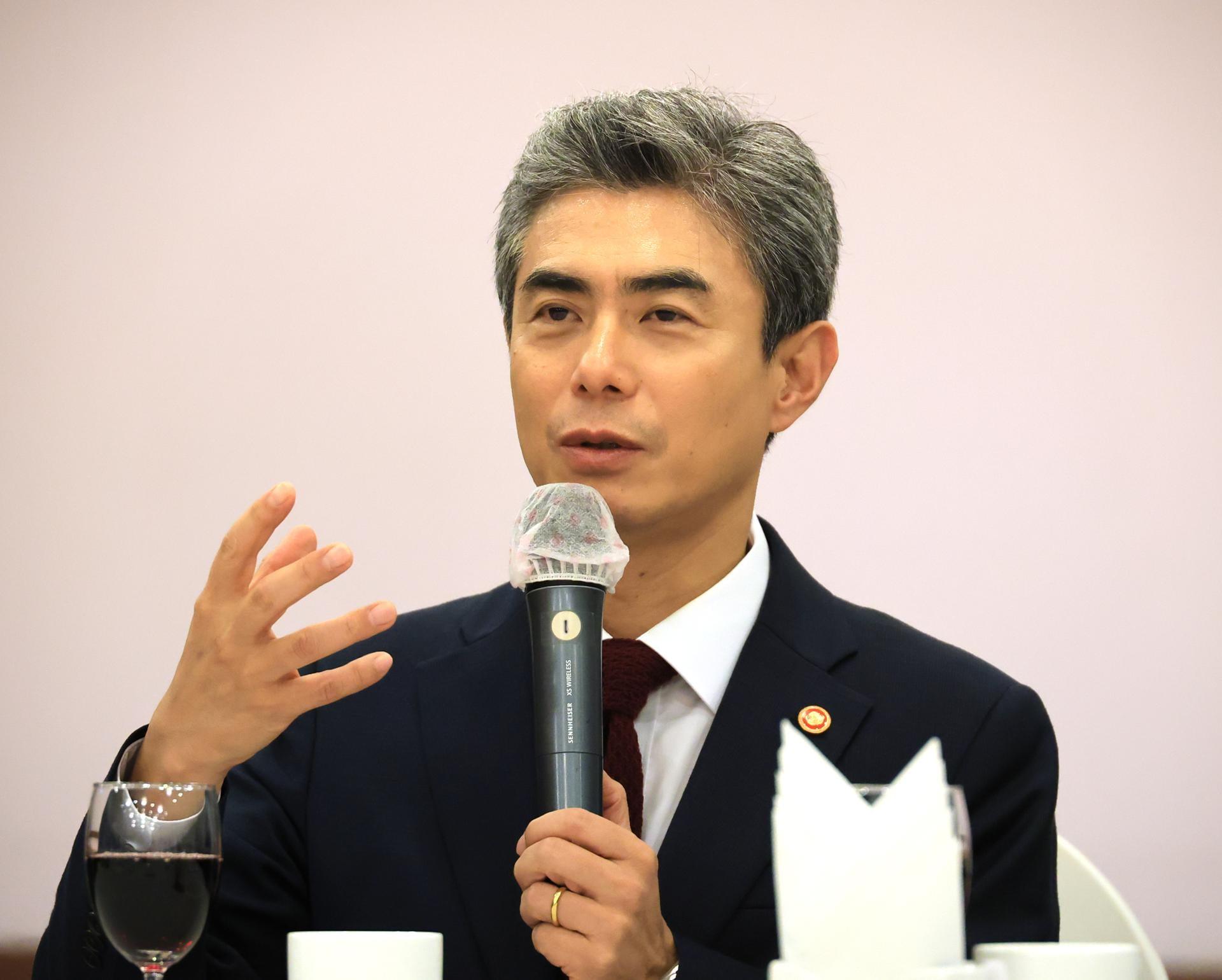
Defense Minister Kang Shin-chul speaks during an advisory committee meeting on the tentatively named National Military Academy in Yongsan District, Seoul, Tuesday.
Defense Minister Kang Shin-chul speaks during an advisory committee meeting on the tentatively named National Military Academy in Yongsan District, Seoul, Tuesday. · Source: Yonhap

Defense Minister Kang Shin-chul on Tuesday reiterated the need to integrate South Korea's Army, Navy and Air Force academies into a single institution, saying the reform is essential to preparing the military for future warfare and strengthening long-term security.

Kang made the remarks during a meeting with about 60 cadets from the three academies at the Korea Military Academy in northern Seoul. The gathering was intended to hear the cadets' views on the government's integration plan, which has become one of the most debated defense reforms of the year.

Location still under review

The minister said the location of the proposed academy remained under consideration. Under a basic plan unveiled in July, the government envisioned establishing an integrated military academy at Jaundae, a compound of military training and education facilities in Daejeon, about 140 kilometers south of Seoul. The original plan called for cadets from all three services to undergo four years of education at the new institution.

Since taking office in September, however, Kang, a graduate of the Korea Military Academy, has signaled a possible revision. The ministry is reportedly considering retaining some facilities at the naval and air force academies while relocating the Army academy, a compromise that could ease opposition from the smaller services.

Political backdrop

The push for integration gained additional urgency after President Lee Jae Myung said in August that Army academy graduates had been linked to past military coups and called for swift integration to prevent another coup. The remarks were widely interpreted as an allusion to military commanders' involvement in former President Yoon Suk Yeol's failed martial law attempt in December 2024.

Kang said he had discussed the plan with the president and emphasized that Lee recognizes the sacrifices and contributions of service members and cadets. The minister's comments appeared aimed at reassuring cadets that the reform is not a blanket indictment of the military.

Seeking diverse views

Earlier on Tuesday, the ministry formed a 15-member consultative group to gather diverse views on the proposal. Six members are graduates of the three military academies and will represent those opposed to the integration plan.

The consultative group is expected to review concerns about preserving the traditions and identities of the Navy and Air Force academies, as well as the practical challenges of merging campuses, faculty and curricula that have operated independently for decades.

What comes next

The integration plan is unlikely to be finalized quickly. The ministry must settle on a location, decide how much of the existing academies to retain, and win enough support among cadets, graduates and lawmakers to move forward.

For now, Kang has made clear that he sees integration as a strategic priority rather than a symbolic change. The debate will test whether South Korea can reshape one of its most tradition-bound institutions while keeping the military's morale and readiness intact.

Tags

  • South Korea
  • defense
  • military academies
  • Kang Shin-chul
  • Lee Jae Myung
  • integration
Keep scrolling for more stories