
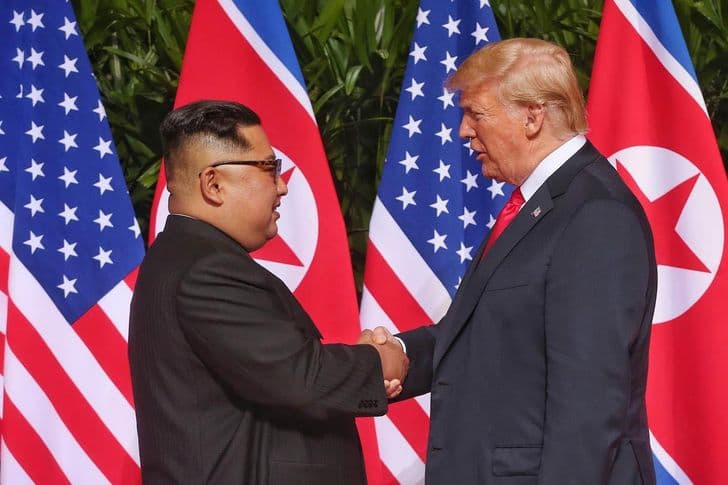
Democrats swept both the House and Senate in Tuesday's midterm elections, and the result has immediately become a variable in a different conversation entirely, whether President Trump still has the room to pursue a summit with Kim Jong Un around this month's APEC gathering in Shenzhen.
The case for a chilling effect
Ahn Chan-il argued the election outcome puts real brakes on diplomacy from both directions, saying a Democratic victory would put serious brakes on both Trump's efforts to meet Kim and the South Korean government's outreach to North Korea, a reading that treats the midterms as narrowing options in Washington and Seoul at the same time. Shin Beom-chul offered a related but distinct worry, suggesting that losing control of both chambers could turn Trump into a lame duck earlier than expected, which would not necessarily block a summit from happening but could hollow out what it actually produces if Trump's leverage at home is already fading.
The case against reading too much into it
Other analysts pushed back on the idea that domestic politics will dictate Trump's North Korea strategy. Fred Fleitz predicted Trump would largely disregard Democratic criticism in pursuing a meeting with Kim if he wants one, treating foreign policy as an arena where this president has shown little inclination to let congressional opposition set the agenda. Sean King went further, suggesting the pressure could cut the opposite way, that domestic political strain might actually intensify Trump's foreign policy engagement rather than dampen it, on the logic that a splashy diplomatic move plays well precisely when the domestic picture looks shakier.