
A regulatory dispute involving Coupang has spilled into the middle of Korea's 350 billion dollar investment talks with the United States, adding an unresolved commercial fight to a negotiation that had already been carrying enough on its own.
The Seoul High Court rejected Coupang's request to suspend a Fair Trade Commission inspection order, a ruling that keeps the regulator's investigation moving even as Coupang has refused to cooperate, citing a lack of advance notice for the probe. FTC Chairman Ju Biung-ghi addressed the standoff at a press conference on Monday, saying the commission will continue to enforce Korean law without regard to nationality, and the FTC said it plans to review its internal rules to close loopholes that companies could use to delay investigations.
Washington Sees a Different Picture
The dispute looks different from the American side. A US House committee accused Korean authorities in July of discriminatory treatment toward Coupang, and a US lawmaker has since introduced legislation targeting foreign officials accused of anti-American business discrimination, a bill that would give Washington a formal tool to respond to exactly the kind of regulatory action Seoul insists is neutral enforcement.
An Awkward Backdrop for a Bigger Deal
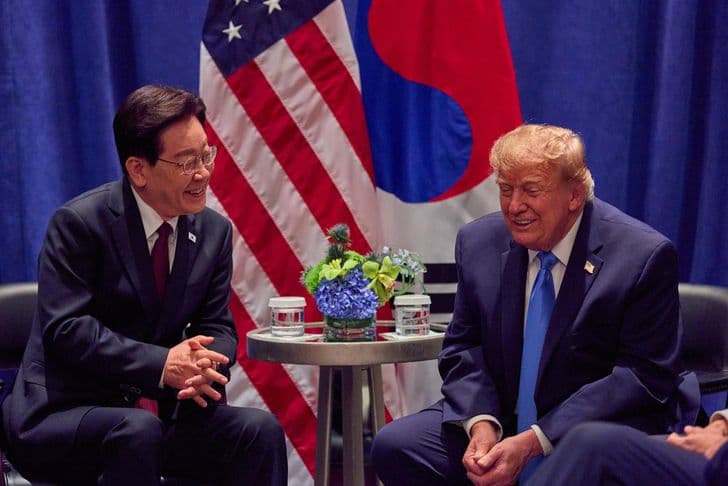
The timing puts the Coupang fight uncomfortably close to talks that matter far more to the overall relationship. President Lee Jae-myung and President Trump met Tuesday on the sidelines of the United Nations General Assembly, part of a broader negotiation over Korea's 350 billion dollar investment commitment in the United States, which already includes a 200 billion dollar gas-fired power project in Texas as its first major piece. Nuclear power, Westinghouse, and Alaska LNG projects are also on the table as the two sides work through the larger package.
Neither Side Looks Ready to Bend
An industry official summed up the standoff bluntly, saying neither country looks likely to make concessions on the Coupang dispute, a read that leaves the case sitting awkwardly alongside talks the two governments would presumably rather keep moving smoothly. With Seoul unwilling to soften its antitrust enforcement and Washington treating the matter as a question of fair treatment for an American-linked company, the Coupang dispute has become a test of whether a single regulatory fight can be kept separate from a much larger economic relationship, or whether it ends up shaping how far that relationship can go.