
A financial product designed to protect Korean investors has ended up hurting many of them, and the fallout is now reaching the top of President Lee Jae-myung's economic team. Single-stock leveraged exchange-traded funds tied to Samsung Electronics and SK hynix have become the center of a market storm, and the recriminations have turned political.
The funds were launched on May 27, 2025 with a defensible aim, to pull retail traders away from leveraged products listed in Hong Kong and to ease pressure on the won. By magnifying both gains and losses, though, they did the opposite of calming the market, feeding a rally and then a reversal of unusual violence.
The scale of the damage
The numbers are stark. Citi estimated that Korean retail investors lost around 38.7 billion dollars on single-stock leveraged ETFs over the span of a single month. Behind the aggregate are individual stories, among them a 36-year-old who said a year's salary vanished in just one month.
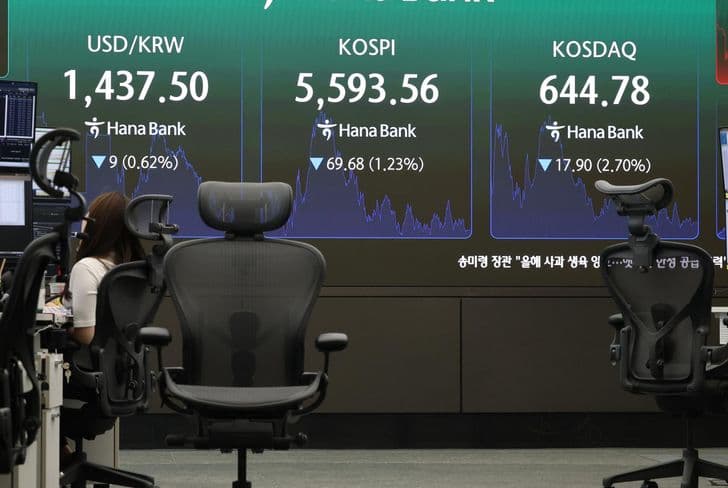
The broader market has felt it too. The KOSPI, which had at one point climbed toward 9,000 during the rally, slid 1.23 percent on Thursday to close at 5,593.56, while the tech-heavy KOSDAQ fell 2.7 percent to 644.78 and the won traded near 1,437.50 to the dollar. What went up quickly has come down just as fast.
The blame reaches the top
The political weight is falling on Kim Yong-beom, the presidential chief of staff for policy and an early advocate of the products, who is now facing calls to step down. He has pushed back, arguing that single-stock leveraged ETFs were not solely responsible for the volatility and pointing to the behavior of retail traders.
The opposition is unconvinced. Representative Lee Man-hee said flatly that President Lee should sack Kim immediately, turning a market failure into a test of the administration's credibility. Finance Minister Koo Yun-cheol is leading the emergency response, working alongside Bank of Korea Governor Shin Hyun-song, Financial Services Commission Chairman Lee Eog-weon and Financial Supervisory Service Governor Lee Chan-jin.
Why small products moved a big market
Part of the problem is structural. In a market with limited liquidity, concentrated bets on a handful of large stocks can swing prices far more than their size suggests. Eric Balchunas of Bloomberg captured the dynamic, noting that the tail can wag the dog more easily in less liquid markets, where a wave of leveraged buying or selling meets thin trading on the other side.
That is precisely what regulators say they are trying to defuse. Officials are weighing caps that would limit these funds to 20 percent of a portfolio, minimum deposit requirements took effect Friday, and authorities are studying a Hong Kong-style variable leverage system that would dial the ratio down from twice to one and a half times, or to one, when conditions turn.
A wider reckoning
For the government, the episode is more than a single bad product. Opposition lawmakers have seized on it to demand a broader overhaul of the administration's financial leadership, framing the losses as evidence of an economic team that misjudged the risks.
Whether the new limits restore calm will take time to tell, and much of the money already lost is not coming back. The lasting question is one of trust, whether a public burned by a state-blessed product still believes the officials who blessed it, and whether the president stands by the team that built it.