
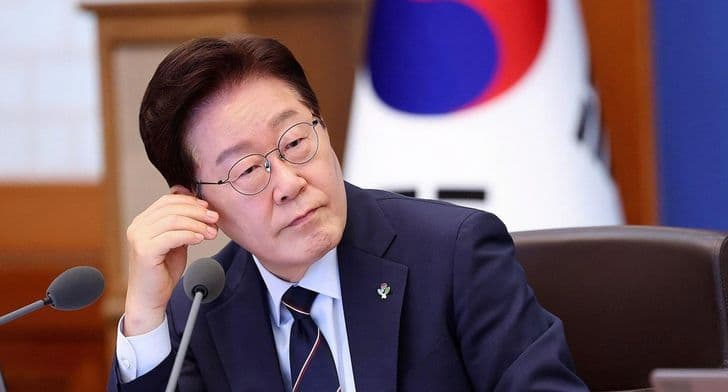
President Lee Jae-myung's approval rating has fallen to the lowest point of his term, dragged down by turmoil in the housing market and on the stock exchange that has left voters uneasy about his handling of the economy.
In a Realmeter survey released on Tuesday, 45.9 percent of respondents approved of Lee's performance while 50.5 percent disapproved. It was his weakest showing since taking office, and the first time his disapproval had climbed above the 50 percent line.
Two surveys, one direction
A separate poll pointed the same way. The National Barometer Survey, released on July 30, put his approval at 53 percent against 37 percent disapproval, still positive but the lowest that survey has recorded during his term, down two points from two weeks earlier. The Realmeter poll carried a margin of error of 2 percentage points, the barometer survey 3.1 points, both at a 95 percent confidence level.
What is dragging him down
The pressure is coming from several directions at once. Analysts tied the slide to stock market volatility, the controversy over leveraged ETFs that cost retail investors heavily, unease about housing policy, debate over a constitutional amendment and disagreement about tightening jeonse loan rules.
The market backdrop made the timing worse. Seoul apartment prices rose for a 76th consecutive week through July 27, undercutting the government's promise to cool housing, while the KOSPI fell on four of six trading days during Lee's diplomatic trip abroad, so that a week of foreign deal-making played out against a sinking market at home.
A warning from the experts
Observers framed the numbers as a signal to change course. Jung Jae-hwan, a political science professor at Inha University, said the president may need to pursue financial market policies that are more responsive to market realities rather than pressing ahead with his current agenda.
A real estate expert, speaking without attribution, was blunter about the underlying strategy, saying the president appeared to be overly focused on shifting household wealth from real estate into financial markets without adequately taking market conditions into account. The critique cuts at the heart of Lee's economic approach.
The gap between abroad and home
The ratings capture a familiar bind. Lee returned from a five-nation tour laden with investment pledges, but headlines about deals abroad have not offset anxiety about prices and portfolios at home. Until the economy feels steadier to ordinary Koreans, the foreign wins may keep failing to move his standing, and the numbers suggest the patience of voters is thinning.