
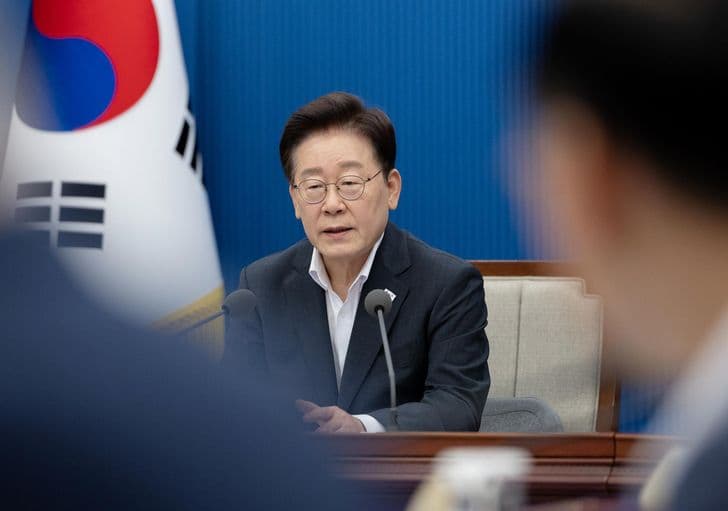
President Lee Jae Myung has formally designated portions of Geoje and Tongyeong, two coastal cities in South Gyeongsang Province, as special disaster zones following days of torrential rainfall that left widespread damage across the southeastern region. The announcement, confirmed Friday through a written briefing from presidential spokesperson Kang Yu-jung, unlocks a tier of government assistance reserved for disasters severe enough to overwhelm local response capacity, according to Korea Times.
The special disaster zone status is one of the strongest tools available to the central government when a natural disaster inflicts damage beyond what municipal and provincial budgets can absorb. Areas granted this designation typically become eligible for expanded state funding covering emergency relief, infrastructure repair, and financial support for affected households and businesses, in addition to whatever assistance provincial authorities have already mobilized.
Geoje and Tongyeong, both known for their shipbuilding industries and coastal tourism, were among the hardest hit as heavy rains swept through the southeastern coast in recent days. The exact scale of the flooding and the resulting damage to homes, roads, and public facilities was not fully detailed in the initial announcement, but the severity was sufficient for the presidential office to move quickly on the designation rather than wait for a complete damage assessment.
According to Kang, the government's review is not yet finished. Officials are conducting a more detailed survey of the broader region to determine whether additional areas beyond the initially designated zones in Geoje and Tongyeong warrant similar support. This suggests the flooding's impact extended beyond the two cities named so far, and further designations could follow in the coming days or weeks as damage reports are compiled.
The presidential spokesperson also indicated that full-scale restoration work is already underway, with the government committing to mobilize all available resources toward recovery. That language points to an interagency effort likely involving the Ministry of the Interior and Safety, which typically coordinates disaster response, along with local government bodies, the military, and volunteer organizations that are often called upon during major flood recovery operations in Korea.
For residents of Geoje and Tongyeong, the special disaster zone designation carries immediate practical significance. Affected households may become eligible for temporary housing support, subsidies for property damage, and relief from certain tax and utility obligations. Small business owners whose shops or facilities were damaged could also see access to low-interest loans or grants intended to help them reopen more quickly.