
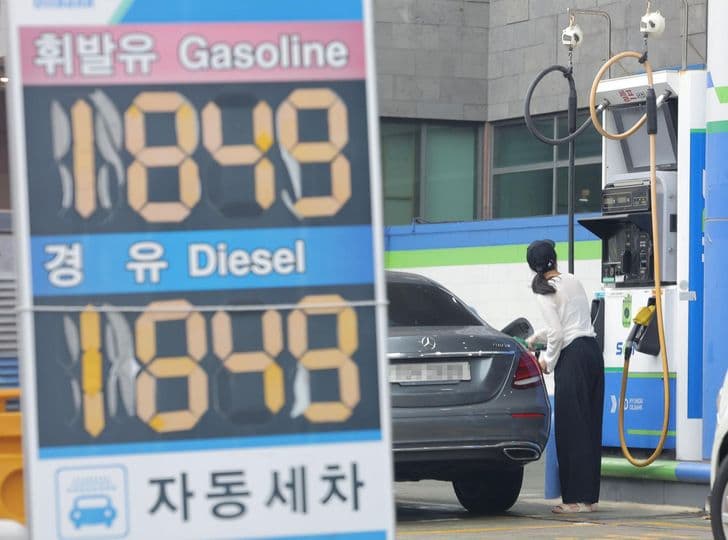
South Korea's trade and industry authorities have opted to leave price ceilings on fuel products untouched for a second straight cycle, a decision that reflects both the stubbornly high level of global crude prices and the government's caution about disrupting fragile household budgets. According to Korea Times, the Ministry of Trade, Industry and Energy announced Friday that the maximum prices local refiners can charge gas stations for regular gasoline, diesel and kerosene will hold at 1,784 won, 1,773 won and 1,380 won per liter respectively, effective through the coming four-week period starting Saturday.
The freeze comes as international benchmarks remain elevated due to continued instability in the Middle East, a region whose output and shipping routes have an outsized influence on prices at the pump in oil-import-dependent economies like South Korea. Seoul imports the vast majority of its crude, meaning any sustained volatility abroad translates quickly into pressure on domestic fuel costs, energy-intensive industries and household spending.
Price ceilings of this kind function as a policy tool the government can adjust periodically to either cushion consumers from spikes in global energy costs or allow refiners more room to pass through higher input costs. By keeping the caps unchanged rather than raising them, authorities appear to be prioritizing near-term affordability for drivers and businesses even as refiners face continued cost pressure from expensive imported crude.
The decision to freeze rather than adjust the ceiling suggests policymakers are betting that current geopolitical tensions, while serious, have not yet reached a threshold that would force a more dramatic policy response. At the same time, holding prices flat for a second consecutive cycle signals that the ministry does not see conditions easing enough in the near term to justify loosening the caps either.
Middle East tensions have been a persistent undercurrent in global energy markets for much of the year, with disruptions or fears of disruptions to supply chains rippling through pricing well beyond the region itself. For South Korea, a country with virtually no domestic crude production, this dynamic places energy policy squarely at the intersection of foreign affairs and domestic economic management.
Consumers are likely to feel mixed effects from the freeze. On one hand, stable ceiling prices mean no immediate jump at the pump, offering some predictability for commuters and businesses reliant on diesel for transport and logistics. On the other hand, the ceilings remaining at an already elevated level means drivers are not seeing the kind of relief that would come with prices moving lower, since a freeze locks in the current higher band rather than reducing it.